
Master the Chapter: Handwritten Physics Notes Solutions for Class 9 Sound PDF Download
Physics can often feel like a complex web of formulas and abstract concepts, but the chapter on “Sound” is one of the most relatable and fascinating parts of the Class 9 curriculum. Whether you are preparing for your CBSE Term exams, the JKBOSE annual papers, or just trying to build a strong foundation for higher classes, having the right study material is crucial.
Read Also : Tissues Chapter 6 Biology Handwritten Notes for Class 9
In the digital age, typed text is everywhere, but there is a unique magic to Handwritten Physics Notes Solutions for Class 9 Sound. They offer a personalized touch, better retention, and clarity that standard printed material often lacks. Today, we will explore how you can leverage these notes, find the Best Sound Class 9 PDF download options, and ace your examinations.
To Access / Download Notes :
Call/WhatsApp : +919103270253
Why Choose Handwritten Notes for Class 9 Physics?
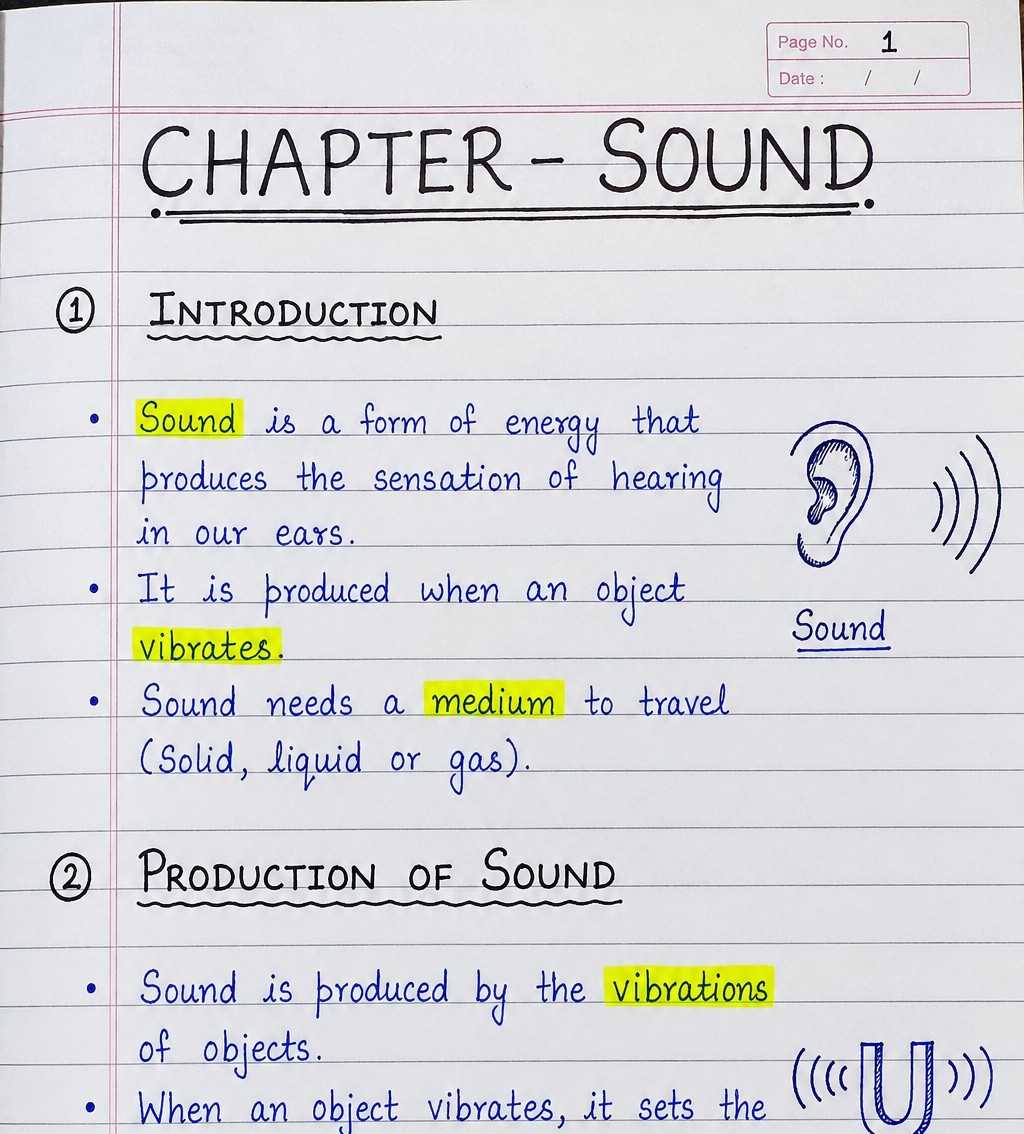
While standard textbooks are excellent for theory, handwritten notes are a game-changer for revision and concept clarity. Here is why students prefer them:
- Better Retention: The act of writing (or reading handwritten text) engages your brain differently, improving recall during exams.
- Simplified Language: Handwritten notes often use bullet points, flowcharts, and simple language that breaks down the complex physics of sound waves.
- Highlighted Keywords: Important definitions and formulas are usually underlined or highlighted, making revision quick before the exam.
Understanding the Science of Sound (Class 9 Physics)
Before we dive into the download links, let’s quickly recap what you will find in Class 9th Sound Notes.
What is Sound?
Sound is a form of energy that produces the sensation of hearing. It travels in the form of waves. Unlike light, sound requires a medium (solid, liquid, or gas) to propagate.
Key Concepts Covered in the Notes
Our Handwritten Physics Notes Solutions for Class 9 Sound cover the entire NCERT and JKBOSE syllabus in detail, including:
- Production and Propagation of Sound: How sound is produced (vibrations) and how it travels through different mediums.
- Characteristics of Sound Waves: Understanding Frequency, Amplitude, and Velocity.
- Laws of Reflection of Sound: How sound echoes and reverberates.
- Range of Hearing: The concept of Ultrasound (frequencies above 20,000 Hz) and Infrasonic sounds.
- Numericals: Step-by-step solutions for questions based on the speed of sound, wavelength, and time period.
Syllabus Coverage: Aligned with JKBOSE, NCERT, and CBSE
One of the best features of these comprehensive notes is their universal applicability. Whether you are a student in Jammu & Kashmir following the JKBOSE curriculum, or studying under the central boards, these notes are designed to align perfectly with your syllabus.
| Board | Applicability |
|---|---|
| NCERT | Fully compliant with the “Sound” chapter (Chapter 12). |
| CBSE | Covers all learning objectives and competency-based questions. |
| JKBOSE | Aligned with the uniform syllabus and examination pattern. |
Detailed Sound Question Answers and Solutions
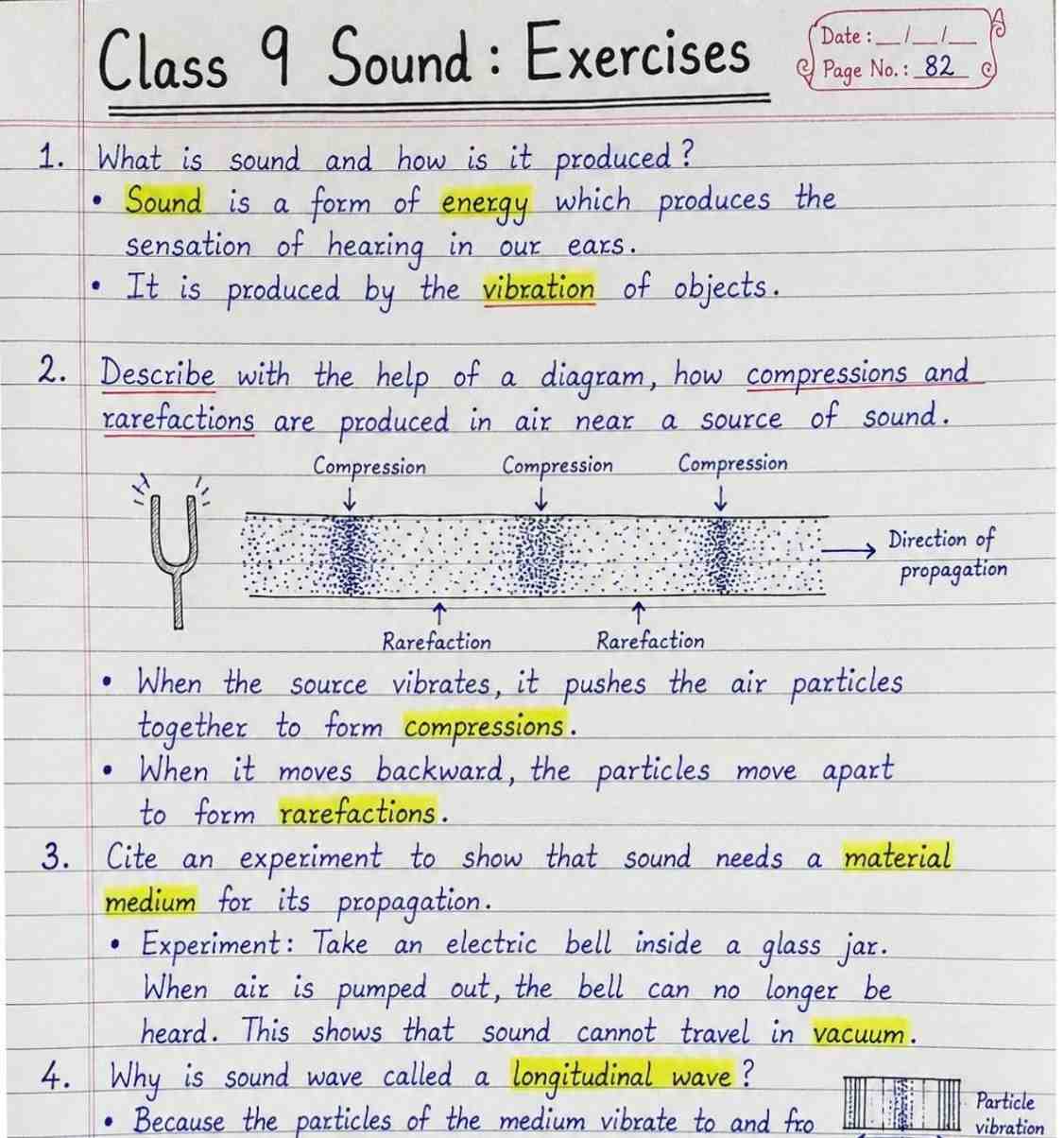
The “Solutions” part of the notes is what sets them apart. Usually, students struggle with the back-of-the-chapter questions. This PDF includes:
- In-text Questions: Detailed explanations for the “Let’s Answer” sections within the chapter.
- Exercise Solutions: Clear, logical solutions to the 20+ questions at the end of the chapter.
- Extra Questions: Additional multiple-choice questions (MCQs) and subjective questions likely to appear in board exams may be a part of Class 9 Sound Question Answers pdf bundle.
Sample Question and Answer Approach
Q: Why is sound wave called a longitudinal wave?
A: Sound waves are called longitudinal waves because the particles of the medium vibrate parallel to the direction of propagation of the wave. This creates regions of compressions (high pressure) and rarefactions (low pressure).
Q. What are the Characteristics of Sound?
The various characteristics of Sound are : Wavelength, Amplitude, Frequency etc.
Quick Reference: Important Formulas
Your handwritten notes will feature a dedicated section for formulas, making it easy to solve numerical problems. Here are the key formulas you will find:
Speed (v) = Frequency (ν) x Wavelength (λ)
Time Period (T) = 1 / Frequency (ν)
Speed = Distance / Time (For echo numericals).
Reflection: The angle of incidence equals the angle of reflection for sound (similar to light).
How to Download the Sound Class 9 PDF
Getting access to these high-quality notes is easy. We have compiled a Sound Class 9 PDF Download option that provides you with instant access.
Steps to Download the PDF:
- Click on the link provided below.(Click here to Download Sample Sound Notes)
- You will be redirected to a secure download page.
- Click the “Download” button to save the Physics Class 9 Sound notes PDF to your device.
- Open the PDF and start studying offline, anytime, anywhere.
Disclaimer: Ensure you have a PDF reader installed on your device to view the files.
Revision Techniques for Better Scores
Simply downloading the PDF isn’t enough; you need to use it effectively. Here is how you can use these notes for top scores:
- First Read: Go through the chapter from your main textbook (NCERT/JKBOSE).
- Second Pass: Read the handwritten notes to grasp the core concepts quickly.
- Practice Numericals: Try solving the numerical problems on your own before looking at the solutions.
- Last-Minute Revision: Use the “Key Points” and “Formulas” pages at the end of the notes just before the exam.
Conclusion
Mastering the chapter on Sound in Class 9 doesn’t have to be a difficult task. With the right resources, like our Class 9 Sound Handwritten Notes , you can ensure that you score the highest marks while developing a genuine understanding of the subject.
Download the notes today and take the first step toward academic excellence with a personal touch that only handwritten material can provide.
Frequently Asked Questions (FAQs)
Q1: Are these handwritten notes sufficient for JKBOSE board exams?
A: Yes, these notes are meticulously crafted to cover the specific syllabus and question patterns of the JKBOSE board, along with being 100% aligned with NCERT and CBSE standards.
Q2: Is the “Sound Class 9 PDF Download” completely free?
A: No, we offer these high-quality notes as a paid resource to help students excel in their studies without any barriers.
Q3: Do the notes include numerical solutions?
A: Absolutely. The Handwritten Physics Notes Solutions for Class 9 Sound include step-by-step solutions for all numerical problems, including tricky ones related to echoes and the speed of sound.
Q4: What is the difference between these notes and typing out notes?
A: Handwritten notes are proven to aid in memory retention because they involve visual and motor memory. They also often include diagrams and arrows that make complex processes easier to visualize.
Q5: Can I use these notes for other boards like ICSE?
A: While primarily designed for state and national boards, the fundamental physics of sound is universal. These notes can serve as excellent supplementary material for any board curriculum.
Ready to get started? Download your Handwritten Physics Notes Solutions for Class 9 Sound PDF now and study smarter, not harder!


