
Handwritten Study Material for Class 10 Science Chapter 8 How Do Organisms Reproduce Notes
Are you in 10th standard and want to excell in Science subject. Then here might be some study material for you. Here at our web portal, the students can look for Class 10 Science Chapter 8 How Do Organisms Reproduce Notes. Besides, you can also look for other Class 10 Science Chapterwise Solutions. How Do Organisms Reproduce Question Answers are the best resources for students who are preparing for their board exam as it contains the entire lesson including Textbook Question Answers. These handwritten notes are compiled into short pdf format and include almost all important topics.
For Notes Contact WhatsApp :
+919103270253
With our Class 10 Notes of Science, you can cover all the important topics above including the textbook solutions of Control and Coordination. These notes also contain necessary diagrams in a very concise way.
Read Also : Class 10 Science Chapter 7 Control And Coordination Notes
Chapter 8 How Do Organisms Reproduce : Quick Overview & Question Answers
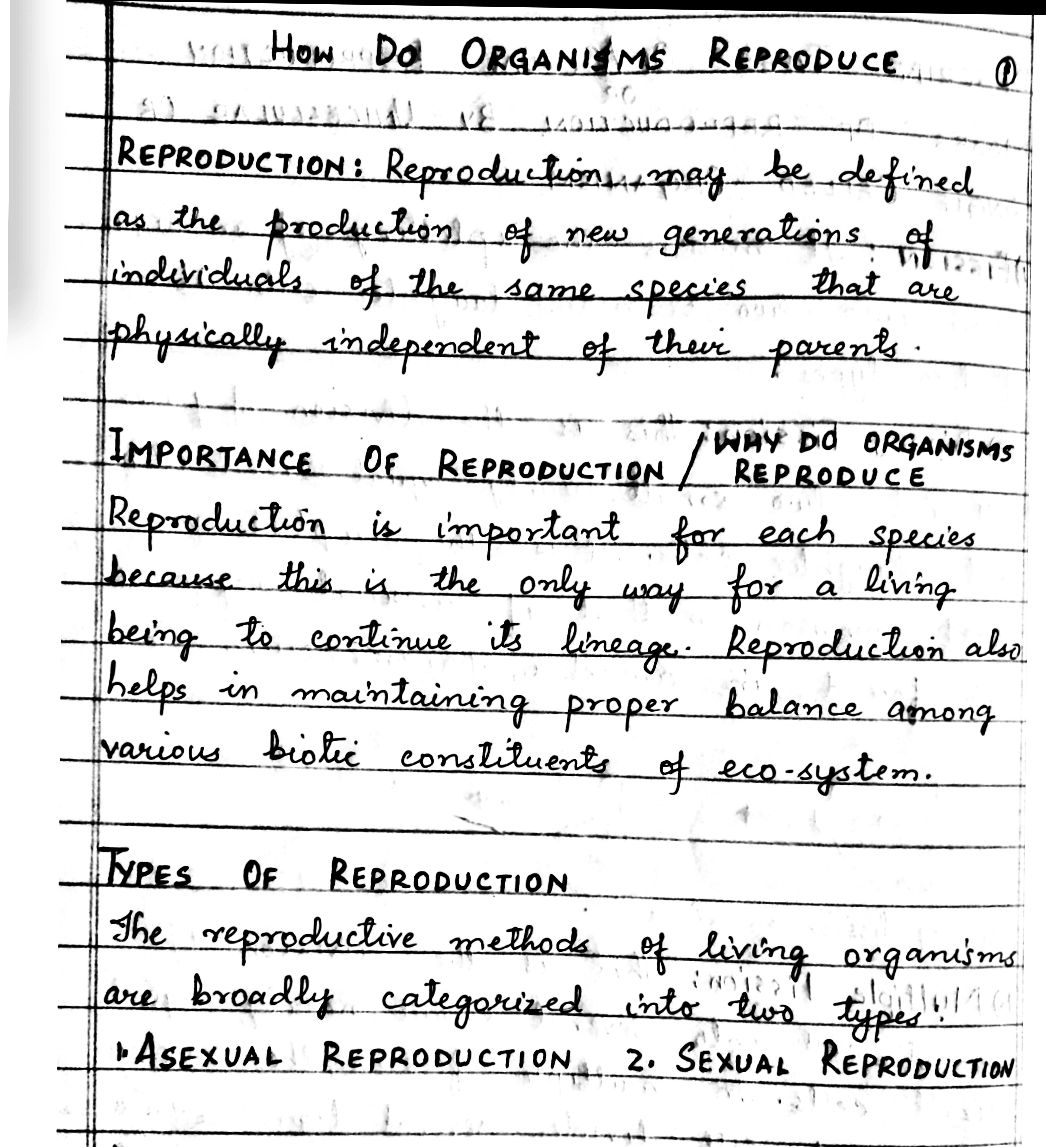
How Do Organisms Reproduce is an important chapter of Class 10 Biology and mostly highlight the importance of reproduction in Plants & Animals. Some of the important topics in Class 10 Science Chapter 7 include :
- Asexual Reproduction
- Methods of Asexual Reproduction
- Structure of Flower
- Sexual Reproduction
- Male Reproductive System
- Female Reproductive System
Important Question Answers for CBSE Class 10 Board Exams
Here are some important questions answers from Class 10 Science Chapter 8, categorized by type.
Very Short Answer Type Questions (1 Mark)
- Name the method by which Spirogyra reproduces under favorable conditions.
- Define the term ‘Fertilization’.
- What is the function of the pollen tube?
- Write the full form of IVF.
- Name the parts of a flower that develop into fruit and seeds after fertilization.
Short Answer Type Questions (2 & 3 Marks)
- Differentiate between asexual and sexual reproduction. (Any three points)
- Draw a neat diagram of a flower and label its reproductive parts.
- Explain the process of regeneration in Planaria. Why is it not considered true reproduction in higher animals?
- List two advantages of vegetative propagation.
- How does the embryo get nourishment inside the mother’s body?
Long Answer Type Questions (5 Marks)
- Explain the process of fertilization in flowering plants with the help of a labeled diagram.
- Describe the various methods of contraception and explain how they help in population control.
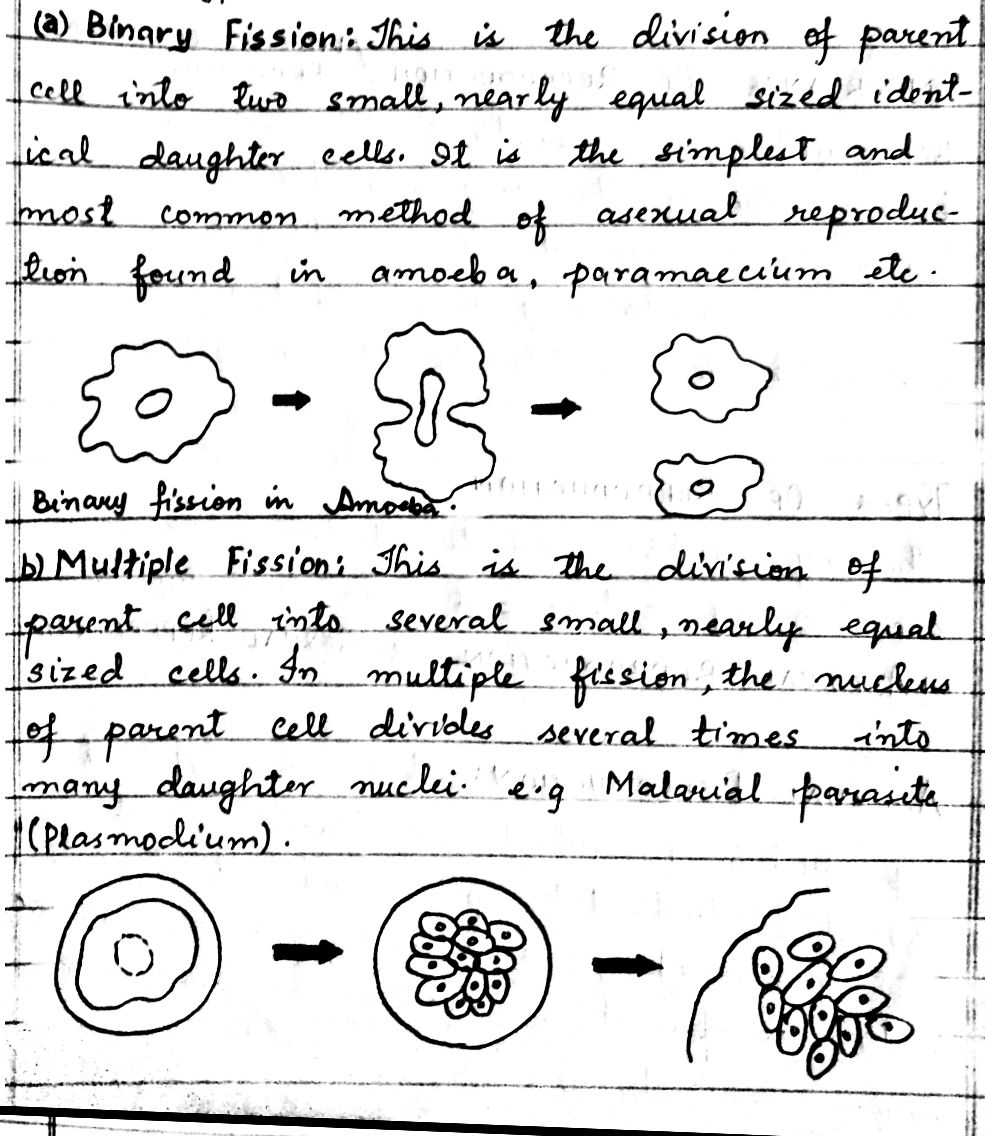
- With the help of a diagram only, show the binary fission in Amoeba.
Important Diagrams to Practice
For scoring full marks, practice drawing and labeling these diagrams:
- Binary Fission in Amoeba
- Budding in Hydra
- Structure of a Flower
- Human Male Reproductive System
- Human Female Reproductive System
JKBOSE & CBSE Class 10 Science Handwritten Notes PDF Download
With the help of How Do Organisms Reproduce Handwritten Notes, students will be able to grasp the chapter in a confident way. These notes are prepared by experts and / or experienced teachers in an organised way so students can rely on this notes for their exam preparation.
Class 10 Reproduction Notes have been prepared in line with latest JKBOSE Syllabus , though there may be some extra topics for better understanding.
Students can access these notes anytime on our website in printed format. If you find notes helpful or are not satisfied, kindly write to us at our mail.
NCERT Solutions for Class 10 Reproduction | Key Takeaways for Quick Revision
Let’s now dive into some more points that need to be discussed. NCERT Solutions for Class 10 Chapter 8 Biology has some key points that need to be learnt by heart.
1. Types of Reproduction
A. Asexual Reproduction
A single parent gives rise to offspring without the involvement of gamete formation. The offspring are genetically identical to the parent (clones).
Modes of Asexual Reproduction:
Fission:
Binary Fission: The parent cell divides into two identical daughter cells (e.g., Amoeba, Paramecium).
Multiple Fission: The parent cell divides into many daughter cells (e.g., Plasmodium).
Fragmentation: The organism breaks up into smaller pieces upon maturation, and each piece grows into a new individual (e.g., Spirogyra).
B. Sexual Reproduction
Involves the fusion of male and female gametes to form a zygote. This process leads to the formation of offspring with genetic variations.
Why is Variation Important?
Variations are the basis for evolution. They help species survive in changing environments.
Read Also : Chapter 1: Chemical Reactions and Equations
Features of Notes
- Students can use Control and Coordination Notes for last minute revision.
- These Short & Easy Class 10 Science Notes will help students excell in their Class 10 Science Exams.
- Class 10 Science Chapter 8 Notes are totally handwritten.
- Diagrams included
- To the point and concise
- Prepared by toppers
- Available in non pdf download
- In line with latest CBSE | JK Board | NCERT syllabi
Summary of the Class 10 Science Chapter 8 How Do Organisms Reproduce Notes
| Total Chapters | 13 |
|---|---|
| Subject | Science |
| Class | 10 |
| Medium | English |
We hope these Class 10 Biology How Do Organisms Reproduce Notes help you ace your exams! Revise these points, practice the diagrams, and you’ll be well-prepared for any question from this chapter.


