
Why Is it Hard for US to Defeat Iran?
As the US fleet is marching towards Iran in a probable intention to attack it, the US Iran War 2026 is almost hanging by a feeble thread. But as Trump’s arrogance and Idiocracy touches skies, Iran’s power is equally making news with all its military hardware backed by China. Now the Question remains? Will Iran succumb to USA military might or will the Islamic Republic of Iran defeat USA and shatter its long aged arrogance to pieces. Let’s bring you to the ground zero and prove to you Why Is it Impossible to Invade Iran .
Latest US Iran War 2026 Update
As US is on the brink of declaring a war on Iran, Iran’s Supreme Leader has been relocated to a secret place amid fears of assassination and attack by ruthless country USA. Here’s the latest happening from Iran:
As per the latest news update on Iran US War 2026, Iran’s Supreme Leader Ali Khamenei has been transferred to a highly secured underground shelter in Tehran amid fears of a potential US attack, . The facility is said to include interconnected tunnels designed to withstand possible strikes.
Sources indicated that Masoud Khamenei, the supreme leader’s third son, has taken over day-to-day management of his father’s office and serves as the main channel of communication with Iran’s executive branches.
Why Is it Impossible to Invade Iran : The Proof
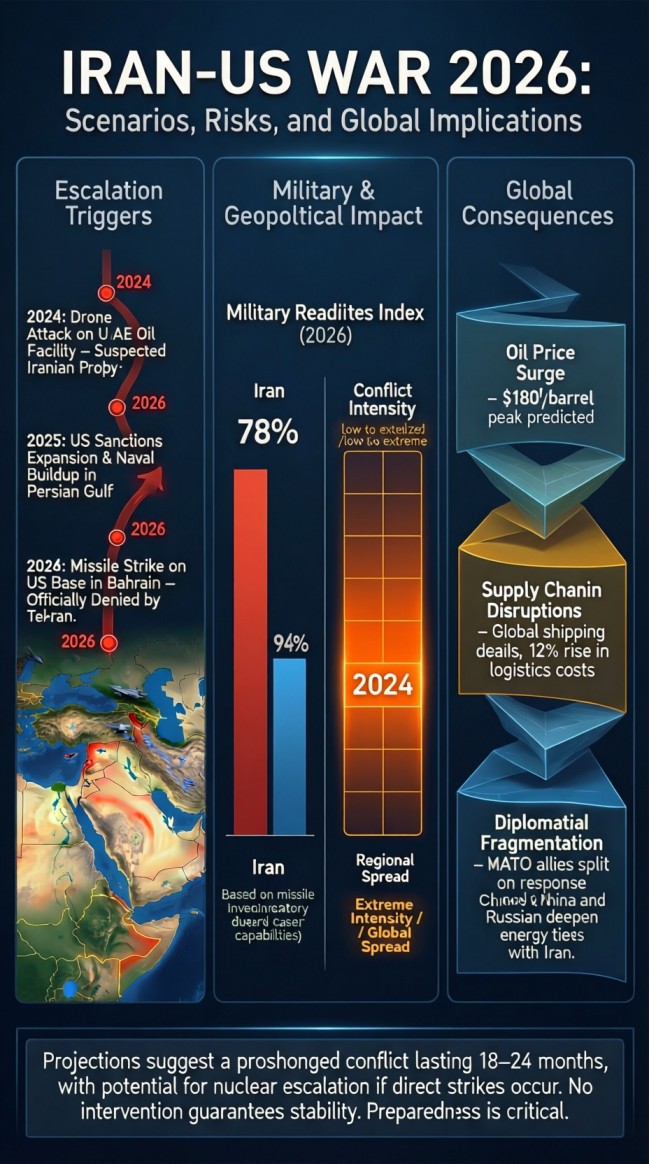
Coming to Iran, It’s one of the oldest civilizations on the planet, and for centuries, it’s been a prize for empires, from the Romans all the way to the British. And yet, in our modern world, it remains unconquered. So today, in this explainer, we’re going to dig into Why Is It Hard to Defeat Iran. So here’s the big question we’re tackling. How has Iran, after decades of sanctions and just intense geopolitical pressure, managed to build such an incredible defense? The answer isn’t just about its military. It’s a story that’s written in its mountains, its strategy technology and its technology.
Topography of Iran Makes Its Invasion Difficult
Okay, first things first, you have got to appreciate its location on the map. Iran is quite literally the crossroads of the world. It’s the land bridge that connects Europe, Asia, and Africa. Now, this prime real estate has made it a target for centuries. But as we’re about to see, it’s also a huge part of its strength.
And that strength? Well, it begins with the land itself. Iran’s first, and you could argue its most powerful layer of defense, isn’t manmade at all. It’s a natural fortress sculpted over millions of years. I mean, just look at this. Running right along Iran’s Western and Southern borders, you’ve got the Zagros Mountain Range.
This isn’t just a bunch of mountains. It’s a massive natural wall that seals the country off from Iraq. For any modern army, just trying to get men and material across this terrain is an absolute logistical nightmare. It’s not just the West. If you look to the north, you’ll find the Albor’s Mountains, another incredible barrier that runs right along the Caspian Sea. These two mountain ranges basically form this giant pincer, protecting the country’s Heartland and making it damn hard for any country including US to invade Iran’s territory.
Wall of Iran
But okay, let’s just say an invading force somehow manages to punch through those mountains but still Why is it Impossible to Invade Iran even now. What do enemies face next? This, the Dashd Alut and the Dashd Al Kavir, two of the most inhospitable deserts on Earth.
Seriously, the Lut desert holds the record for the highest land surface temperature ever recorded. It’s yet another massive natural barrier. Look, this isn’t Just a theory. History gave us a brutal real-world test. Back in 1980, Saddam Hussein’s Iraq, with backing from several Gulf states, invaded Iran. The goal was simple: cross the Zagros quickly and crush the new Islamic government. But, well, the mountains had other ideas. The Iraqi advance got completely bogged down in the mountains almost right away. They spent two years just trying to push through, but the terrain was just too difficult, too punishing.
History & Legacy of Iran
The war dragged for eight horrifying years and ended in a total stalemate. The result? After hundreds of thousands of casualties on both sides, the border didn’t change by a single inch. It’s a really stark lesson in the power of Iran’s natural fortress. But geography, as important as it is, is only the first piece of the puzzle. The second layer of Iran’s defense is ideological and geopolitical. It’s a strategic shield that lets it project power far, far beyond its own borders. To really get With this, you have to look back to the 1979 Islamic Revolution.
This was a seismic event that changed everything. Before ’79, Iran was a pro-western monarchy, a key US ally, and even had pretty friendly relations with Israel. After ’79, it became a sworn enemy of both. This pivot completely rewired its entire approach to the world and made it impossible to defeat Iran in general.
Iran’s Axis of Resistance
So how does Iran fight this new battle? Well, knowing it can’t match the US or Israel in a conventional head-to-head war, it built something called the Axis of Resistance. This is basically a network of proxy groups that creates a buffer zone, letting Iran project its power and deter its enemies across the entire region.
This network is vast. It includes some of the most well-known groups in the Middle East. You’ve got Hezbollah in Lebanon, right on Israel’s northern border. You’ve got Hamas in Palestine, the Houthis down in Yemen who control key shipping lanes, and then various militias in Syria and Iraq. Each one of these acts like a forward operating base for Iranian influence, letting it challenge its adversaries without ever having to engage in a direct state-on-state conflict.
That brings us to the third layer of defense, the actual weapons that arm this network. Iran has focused its military development on a very specific strategy, asymmetric warfare. It’s not about trying to build billion dollar aircraft carriers. It’s about finding cheap but really effective ways to counter them. Here is a perfect example of how that works in the real world. To shoot down a Huffy drone that costs maybe $20,000. A Western Navy might have to fire a missile worth a million dollars, maybe more.
You see the incredible economic imbalance there? Iran can produce thousands of these cheap drones and missiles, forcing its much richer adversaries to spend an absolute fortune just to defend against them. It’s a strategy designed to bleed an opponent dry financially and render him paralysed.
Ballistic Capabilities of Iran
Now, beyond drones, Iran has also invested heavily in another key asymmetric weapon, ballistic missiles that makes the country hard to get conquered. This number right here, 2,000 kilometers or about 1,200 miles, that’s the crucial figure. Why is that so important? Because a 2,000 kilometer range means that from within its own borders, Iran can strike virtually any target in the entire Middle East. We’re talking crucial US military bases, the territory of key allies like Israel and Saudi Arabia, and critical energy infrastructure. It is a massive deterrent.
When you start putting all these pieces together, the geography, the proxy network, and this asymmetric arsenal, you begin to see why a direct US Iran conflict is seen as such a huge uncalculated risk.
Iran’s Final Trump Card : Strait of Harmuz
We’ve seen its three layers of defense, that impassable natural fortress, that strategic web of influence that keeps its enemies busy far from its borders, and a modern arsenal of cheap but effective drones and powerful missiles. But Iran holds one final, and maybe its most powerful, Trump card. This is the Strait of Hormuz, the world’s most important energy chokepoint. A staggering 20% of the entire world’s oil and gas supply passes through this tiny, narrow strait, which Iran effectively controls. The ability to shut this down, even for a short period of time, gives Iran immense leverage over the entire global economy.
Final Question : Can USA Defeat Iran
That really leaves us with the final question, doesn’t it? Why is It Impossible for US to Invade? Iran When you combine its formidable natural defenses, its regional proxy network, and its powerful arsenal with its chokehold on global energy, what is the real cost for a country for instance USA going to war with Iran? It’s a calculation that for now no world power even Trump’s USA has been willing to fully make. If you liked our article, don’t forget to like and share it.


