
JKBOSE Class 10 English Tulip Series Chapterwise Question Answer Solutions: Complete Guide to Prose, Poetry, Short Stories & Play
If you are a JKBOSE Class 10 student, you already know that excelling the Class 10 English is really important. And for that, getting the real and tailored resource is a must. In order to solve that problem for Class 10th students, we have compiled Class 10 English Tulip Series Chapterwise Question Answer Solutions, which is the most effective way to secure high marks in your board exams.
The Tulip Series is a carefully curated anthology that includes thought-provoking Prose, soul-stirring Poems, engaging Short Stories, and a hilarious Play — all designed to enhance your language skills and literary understanding.
In this all-in-one English guide, you will find chapter-wise summaries, themes, handwritten notes , and most importantly, detailed solutions for every single chapter. Whether you are preparing for an extract-based question or a long essay, this resource has you covered.
Let’s explore the complete syllabus section by section.
Prose Section: Detailed Solutions & Summaries
The Prose section of the Tulip Series contains seven powerful texts, ranging from science fiction to autobiography to social commentary. Below is a breakdown of each chapter with links to Class 10 English Tulip Series Chapterwise Question Answer Solutions.
1. Footprints without Feet – H. G. Wells
- Summary: A scientist discovers invisibility but misuses his power.
- Themes: Science without responsibility, crime, and consequences.
- Key Questions: Why did Griffin become a homeless wanderer? How did he finally get caught?
2. An Excellent Father – Jane Austen
- Summary: Excerpt from Pride and Prejudice showing Mr. Bennet’s unique parenting.
- Themes: Parental responsibility, marriage, irony.
- Key Questions: Why is Mr. Bennet called an “excellent father”? Compare his attitude toward Elizabeth and Lydia.
3. From the Diary of a Young Girl – Anne Frank
- Summary: Anne’s experiences hiding from the Nazis.
- Themes: Hope, adolescence, persecution, resilience.
- Key Questions: Why did Anne feel lonely despite having a family? What role does her diary play?
4. Long Walk To Freedom – Nelson Mandela
- Summary: Mandela’s inauguration speech and reflections on freedom.
- Themes: Courage, oppression, equality, sacrifice.
- Key Questions: What does Mandela mean by “freedom is indivisible”? Why did he thank the previous generation?
5. The Sermon at Benares – Berta Renstaw
- Summary: Buddha’s teachings on grief and impermanence.
- Themes: Detachment, suffering, wisdom.
- Key Questions: How did Buddha teach Kisa Gotami about death? What is the message of the mustard seed?
6. Pappachi’s Moth – Arundhati Roy
- Summary: A family story of pride, failure, and hidden cruelty.
- Themes: Patriarchy, jealousy, unspoken trauma.
- Key Questions: Why was the moth important to Pappachi? How did his discovery affect the family?
7. The Merchant of Venice – Adapted from Charles Lamb’s ‘Tales from Shakespeare’
- Summary: The famous courtroom drama of Shylock and Antonio.
- Themes: Justice, mercy, prejudice, revenge.
- Key Questions: Why does Shylock demand a pound of flesh? How does Portia save Antonio?
Poetry Section: Line-by-Line Analysis & Themes
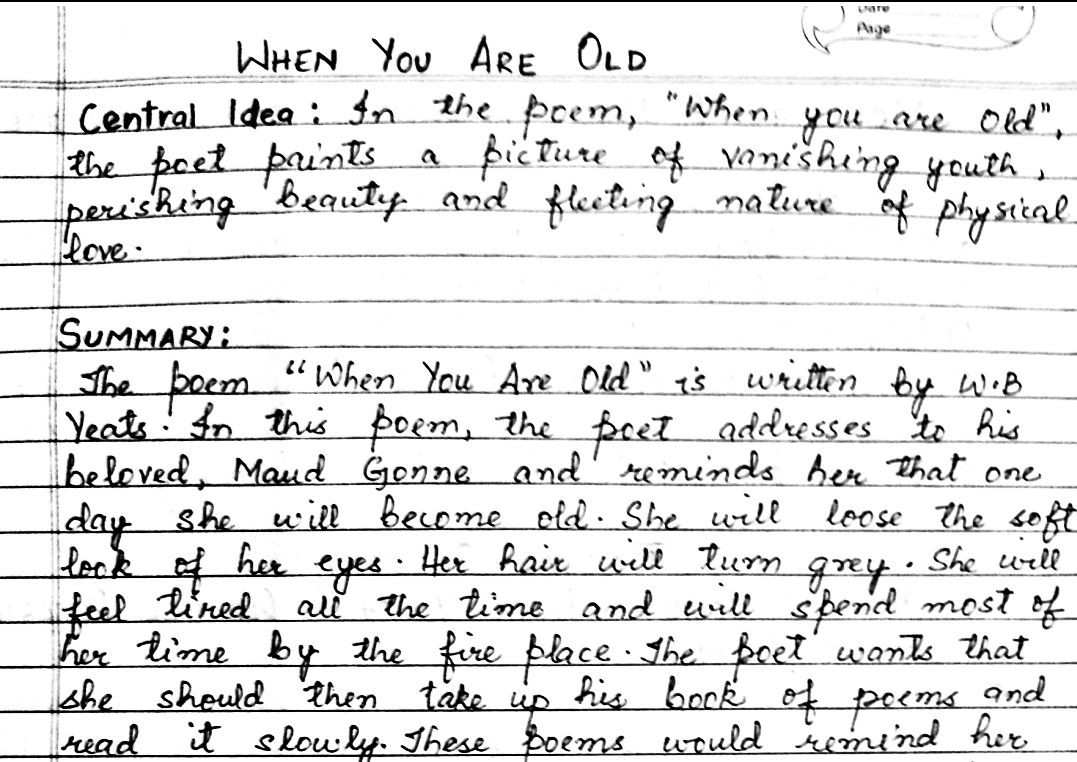
The Poems in the Tulip Series range from classical to modern. Our handwritten notes for poetry include rhyme schemes, poetic devices, and stanza-wise meanings.
8. Prayer – G. A. Mehjoor (Translated by Prof. G.R Malik)
- Theme: Humility, devotion, longing for peace.
- Poetic Devices: Apostrophe, repetition.
9. Miracles – Walt Whitman
- Theme: Finding wonder in everyday life.
- Poetic Devices: Free verse, cataloging, imagery.
10. When You Are Old – W. B. Yeats
- Theme: Unrequited love, regret, the passage of time.
- Poetic Devices: Metaphor, allusion, second-person address.
11. Snowdrop – Ted Hughes
- Theme: Survival, harshness of nature, loneliness.
- Poetic Devices: Consonance, personification, stark imagery.
12. My Mother at Sixty-six – Kamala Das
- Theme: Ageing, fear of loss, filial love.
- Poetic Devices: Simile, metaphor, contrast.
13. An Evening Wet with Rain – Ved Pal Deep (Translated by Shivnath)
- Theme: Nature’s beauty, nostalgia, rural life.
- Poetic Devices: Sensory imagery, alliteration.
14. The Tale of Custard the Dragon – Ogden Nash
- Theme: True courage vs. bravado, humor.
- Poetic Devices: Rhyme scheme (AABB), repetition, hyperbole.
15. Last lesson of the Afternoon – D.H. Lawrence
- Theme: Teacher burnout, futility, detachment.
- Poetic Devices: Dramatic monologue, metaphor, irony.
Short Stories: Concise Summary & Question Answers
The Short Stories section includes four masterpieces. Our Class 10 English JKBOSE Notes for focus on moral dilemmas, character arcs, and surprise endings.
16. The Necklace – Guy de Maupassant
- Summary: A woman borrows a necklace, loses it, and spends ten years in poverty replacing it — only to learn it was fake.
- Theme: Pride, materialism, irony.
- Key Question: What is the central irony of the story?
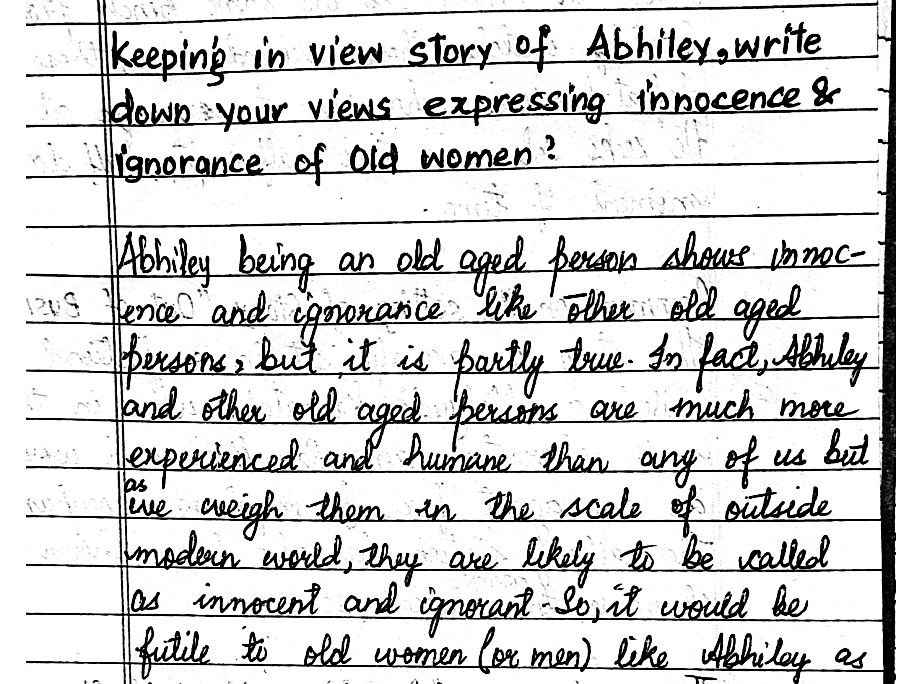
17. Abhiley – Abdul Gani Sheikh (Translated by Ravina Aggarwal)
- Summary: A poignant tale from Ladakh about an old woman’s memories.
- Theme: Loss, memory, tradition vs. modernity.
- Key Question: Why does Abhiley cling to her old house?
18. The Servant – S.T. Semyonov
- Summary: A moral story about kindness and betrayal.
- Theme: Class divide, gratitude, human dignity.
- Key Question: How does the servant prove his loyalty?
19. Dusk – Saki
- Summary: A man who believes evening brings out defeated people meets an unexpected twist.
- Theme: Appearance vs. reality, pride, misunderstanding.
- Key Question: How does the ending surprise both the protagonist and the reader?
Play: The Proposal – Anton Chekov
20. The Proposal
- Summary: A neighbour comes to propose marriage but ends up arguing over land and dogs.
- Theme: Marriage as a business deal, farce, human absurdity.
- Key Questions: Why does Lomov keep fainting? How does Natalya react when she learns about the proposal?
- Notes Available for: Character sketches, dramatic irony, and one-liner summaries.
How to Download JKBOSE Class 10 English Question Answers
To make your preparation seamless, we offer a single downloadable package containing:
- Full Class 10 English Textbook Solutions (chapter-wise)
- Handwritten notes for every poem, short story, and play
- Chapterwise Summary and themes in bullet points
- Extract-based questions with answers
- Glossary of some difficult words (from the textbook)
- Click the button below to receive the download link instantly on WhatsApp.
- 📥 Download Complete Study Material
How to Use English Solutions for Exam Success
- Read the original text from your Tulip Series book.
- Read our summary to check your understanding.
- Practice without looking at answers first.
- Compare your answers Class 10 English Tulip Series Chapterwise Question Answer Solutions.
- Revise using Handwritten Class 10th English Notes 2 days before the exam.
- Focus on themes and glossary for multiple-choice questions.
Why Choose Our English Handwritten Solutions
- Original – Every answer is rewritten in simple, board-appropriate English.
- Aligned with the latest JKBOSE syllabus – Covers all 20 chapters exactly as listed.
- Includes glossary terms from the textbook.
- Extract-based questions prepared as per the new exam pattern.
- Handwritten Study Notes for visual and quick revision.
Class 10 English Tulip Series Book PDF Download
You can legally access the official Tulip Series textbook and our supplementary solution guides. Use the button below to request a direct PDF download link via WhatsApp. You will receive:
- Complete English textbook PDF
- Chapter-wise solutions PDF
- Hand made notes compilation
Class 10th English Guide | MBD Guide | Instant Notes
Well! There may be some other options to go for when students are looking for English Solutions for Class 10th. The most pertinent being Instant Notes or some old timers like MBD guides. If you don’t feel our handwritten Class 10th English Notes Solutions feasible, you may also try them out. We don’t in general force or compel users to specifically use our study material.
Students are at the liberty to choose and comapare the study materials and select the best available.
FAQs – Class 10th English Book Notes Solutions
1. Where can I get Class 10 English Question Answers for all 20 chapters?
You can download the complete PDF using the WhatsApp button above. It covers all prose (7 chapters), poems (8 chapters), short stories (4 chapters), and the play (1 chapter).
2. Does this include solutions for “The Merchant of Venice”?
Yes. Since “The Merchant of Venice” is part of the lesson section (adapted from Charles Lamb), our solutions include character analysis (Shylock, Portia, Antonio), themes of justice and mercy, and important extract-based questions.
3. Are notes available for poems like “My Mother at Sixty-six” and “When You Are Old”?
Absolutely. Every poem has separate handwritten English Notes covering poetic devices, stanza meanings, and short/long answer questions.
4. Is the PDF free?
Yes, the download is completely free. The WhatsApp button provides an automated response with the link.
5. Does this cover stories “Abhiley” and “The Servant”?
Yes. Both stories are included with detailed summaries, themes, and question answers. “Abhiley” also includes cultural context from Ladakh.
6. Can I get a printed version?
The download is a digital PDF, but you can print it at home or at a local print shop.
7. What if the WhatsApp button doesn’t work?
Manually save +919103270253 to your contacts and send this message:
“I need English Class 10th Notes”
8. Is the glossary included in the solutions?
No, the glossary from the textbook hasn’t been integrated into the chapter-wise solutions for easy reference.
Final Words
The Class 10 English Tulip Series Chapterwise Question Answer Solutions provided here are your one-stop resource for acing the board exam. From H.G. Wells to Kamala Das, from Anne Frank to Anton Chekov — every author is covered with precision, clarity, and exam-focused accuracy.
Do not leave your English preparation to chance. Download the complete PDF using the WhatsApp button above, and walk into your exam hall with confidence.


